{{ variable.name }} : {{ variable.values[selectedVariantsIndex[variable_index]].name }}
Quantity:
Min Order Quantity: {{ product.min_quantity }} pcs
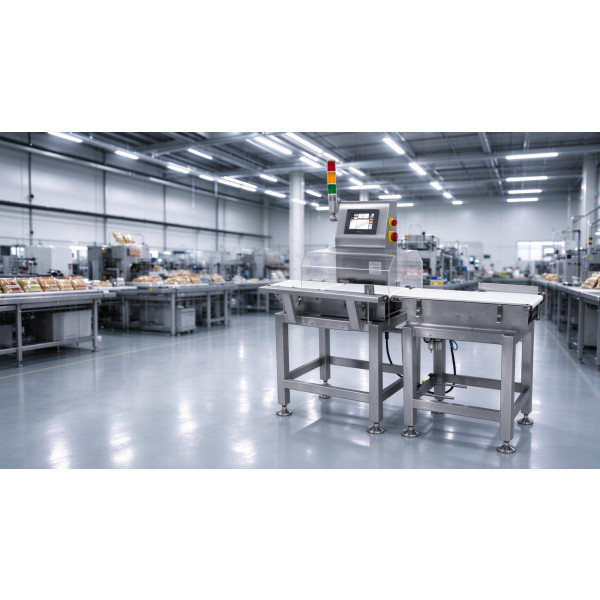
The XRDJ-210 is an inline checkweigher with a paddle rejector, engineered for medium-weight products that travel on a standard conveyor. Instead of blowing air or swinging an arm, it pushes off-tolerance items sideways with a flat blade, which is the gentlest option for fragile packs that must not be dropped, thrown or crushed.
| Weighing range | 2 g – 1000 g (customised) |
|---|---|
| Dynamic accuracy | ±0.3 g – ±1 g |
| Maximum speed | 160 pcs/min |
| Overall dimensions | 1522 × 1222 mm |
| Frame material | SUS304 food-grade stainless steel |
| Reject method | Paddle (blade) / air blast / swing arm |
| Display | 7-inch touchscreen |
| Product recipes | Up to 200 groups |
A photoelectric sensor triggers as each product approaches. The load cell then measures the weight while the item is in motion, and the controller compares that value with the target weight and tolerance stored in the recipe. Products inside the window pass; products outside it are pushed sideways into a reject bin by the paddle blade without interrupting the main line.
Typical products for this paddle reject checkweigher are rigid and semi-rigid packs that must not be damaged: blister packs, small cartons, flow-wrap packs, stand-up pouches, small bottles and trays, chocolate bars, biscuits and small hardware items.
Choosing a reject method is about matching the mechanism to the product. Air blast is fast and cheap but only works for very light, empty bags because the airflow can tear thin film or blow product off the belt. A paddle is slower than an air blast but far gentler, making it the right choice for anything fragile or filled with loose material. A swing arm sweeps the product in a wide arc and suits heavier, tougher items such as cartons and cans. If your line handles more than one product type, specify all three options and switch between them in the recipe.
No. The blade pushes horizontally at belt height, so products are moved aside rather than dropped, thrown or crushed. For very soft pouches we recommend adding a side guide baffle to prevent the bag rolling over.
Both cover the same 2 g to 1000 g range at 160 pcs/min. The XRDJ-120 is built for very small, very fast pouches and offers finer accuracy down to ±0.05 g; the XRDJ-210 has a heavier frame, a paddle rejector and more robust dimensions for medium-weight, rigid packs.
The reject bin is sized for normal operation. For high giveaway rates we recommend a takeaway conveyor or a larger bin so it does not need emptying during a shift.